The circulation of war images in the age of algorithmic attention.
A grainy phone recording of an explosion over Tehran. Swipe.
A video explaining how to make restaurant-quality carbonara. Swipe.
A cat falling off a kitchen counter. Swipe.
An apartment building burning in Tel Aviv after an air strike to the sound of Boom Boom, Tel Aviv. Swipe.
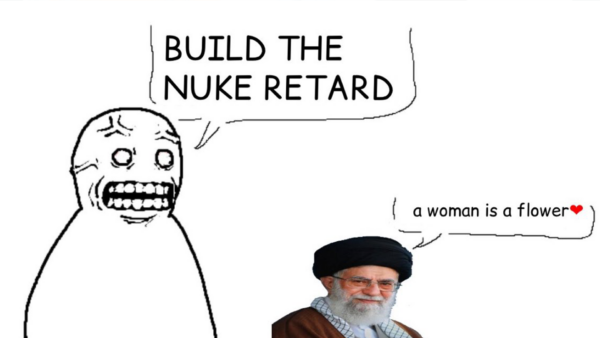
A meme about the apartment building burning in Tel Aviv after a strike.
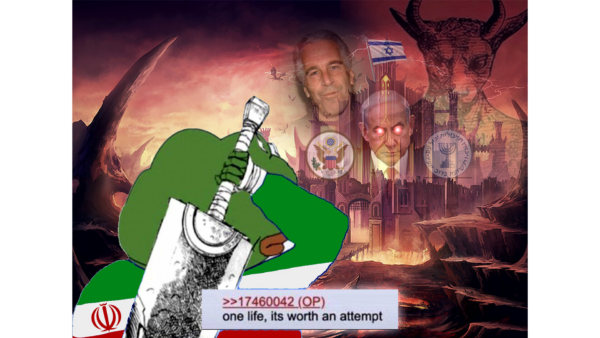
The 2026 war against Iran began on the 28th of February 2026, when coordinated airstrikes by the United States and Israel targeted Iranian military and nuclear-related sites, smack dab in the middle of nuclear disarmament negotiations, marking a sharp escalation in regional tensions. In the immediate aftermath, Iran responded with missile and drone attacks against Israeli territory and U.S. forces in the Middle East, as well as blocking the Strait of Hormuz, further expanding the scope of the war and amping up a broader regional escalation to deter the U.S. and Israel.
The strikes from the US and Israeli side were reportedly coordinated across multiple domains, combining long-range air operations, cyber disruption campaigns, and pre-emptive targeting of radar and air-defense infrastructure in western Iran and around key nuclear facilities. In parallel, cyberattacks disrupted sections of Iran’s financial messaging systems and satellite-linked communications nodes, temporarily affecting banking access and aviation coordination. Iranian authorities described the operation as a “multi-vector assault,” while U.S. and Israeli statements framed it as a preventive measure aimed at delaying nuclear breakout capability rather than full-scale regime confrontation.
Two narratives unfolded side by side, and for those at a distance, me included, those narratives were filtered through socials. They moved through videos uploaded by witnesses, governments, journalists, propagandists, and anonymous accounts whose origins are often impossible to verify, circulating across platforms — Instagram, X (formerly Twitter), Mastodon, Bluesky, Snapchat, TikTok, WhatsApp, Telegram, and Signal.
In between regular life, war.
In this environment, verification itself became asynchronous. Who to follow? How to verify veracity? Open-source intelligence (OSINT) groups, media outlets, and volunteer analysts attempted to geolocate footage using satellite imagery, shadow analysis, and metadata reconstruction, often within minutes of a strike being posted. Yet the same clips were frequently recycled across different conflicts or reposted with altered captions, producing a feedback loop where authenticity was continuously negotiated rather than established. Platforms like X and Telegram functioned simultaneously as primary sources, rumor channels, and evidentiary archives, collapsing distinctions between witnessing and interpretation.
Recommendation systems on short-form video platforms are optimised for retention signals, watch time, replays, pauses, and emotional engagement, rather than informational hierarchy; information coming from ‘legitimate’ or ‘official’ news sources does not get prioritized. Studies of platform behavior during conflict events have shown that content with high affective intensity, particularly imagery involving explosions, destruction, or human reactions within the piece, tends to outperform contextual reporting or long-form analysis. As a result, war footage circulates not primarily because it is most informative, but because it triggers measurable engagement patterns that align with platform monetisation structures.
It also propels emotional engagement in the war. The daily rhythm amplifies, and suddenly a friend with connections on the ground and not much luck of getting in touch with friends or family starts flooding the feed with reshares.
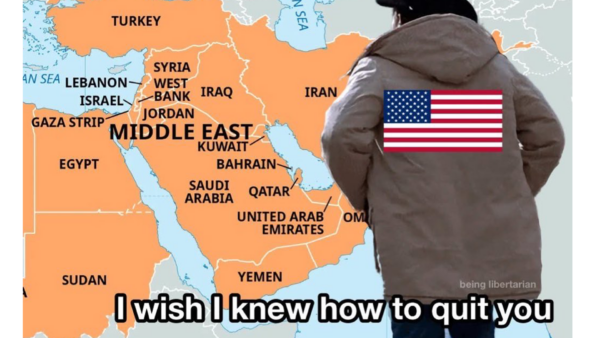
Earlier in the year, another layer was added to this online mediation. Iran struck back in media terms. Not just actual wartime footage, but AI-generated Lego-style videos created by a company called Explosive Media, circulated widely across socials, depicting the war through the visual language of children’s toys. Rendered in plastic bricks, missiles and political figures appeared at once satirical, propagandistic, and entertaining, accumulating vast engagement as they moved through the same systems that distribute memes and influencer content. The videos mocked Israeli and U.S. leaders, caricaturing Donald Trump and Benjamin Netanyahu, while reframing the conflict through an anti-imperialist and pro-Iranian lens. By packaging propaganda in a humorous, highly shareable aesthetic, they reached audiences far beyond traditional state media, turning geopolitical messaging into viral content and allowing Iran to compete for attention within algorithmic economies
It wasn’t though just a matter of ideological conversion, but of broad reach, domination of online conversation, showing how culturally fluent pro-Iran narratives have the potential to be and forcing a discussion in Western media about them. What helped was crafting videos that were in fluent English and that delved into clear references to American politics such as Jeffrey Epstein, MAGA culture, Trump’s speeches, undermining in the wake of their publishing confidence in U.S. and Israeli leadership by amplifying existing political divisions.
This style of synthetic visualisation built on a broader shift toward “aestheticized conflict,” where generative AI tools allow political actors and unofficial networks to rapidly produce stylized representations of real-world violence. These formats often borrow from existing entertainment genres, gaming cutscenes, toy animation, simulation interfaces, blurring the boundary between documentation and reinterpretation. The result is a circulation environment in which authenticity is no longer the primary marker of credibility; instead, shareability, humour, and stylistic coherence within platform cultures determines visibility.
To experience war through a personalised feed is to encounter reality organised less by geography than by recommendation systems and the choice of friends or acquaintances. Two people in the same city may inhabit entirely different wars: one sees nothing, while another sees nothing else.
This asymmetry becomes most visible when users actively train their feeds. The algorithm adapts quickly; sustained attention to footage from Tehran, Tel Aviv, or Beirut, results in saturation, while other users may encounter none of it at all. In this sense, the war is simultaneously everywhere and nowhere, hypervisible and hidden, producing a form of selective witnessing at scale.
To break through the visual noise, AI clickbait seems to have done the trick for Iran. They managed to break through the division, reach a larger demographic, and use it to bend the narrative in their favour.
Visibility and Absence
For every missile strike that enters circulation, many more never show up on a feed. The experience of war is shaped as much by absence as by excess: missing footage, broken connections, and deliberate disconnections.
In This American Life’s episode Blackout1—documenting the imposed Iranian internet shutdown, or rather disconnection from the worldwide web—this absence becomes the defining condition of wartime life. Families lose contact with relatives, journalists lose access to sources, and entire populations vanish from global view as connectivity collapses. The feed continues, but without them. While their feed also continues, but localised.
Large-scale shutdowns typically operate through a combination of BGP route withdrawals, DNS interference, mobile network throttling, and selective blocking of international gateways. In Iran, these measures have historically been deployed in phases, often beginning with mobile data restrictions before escalating to near-total international disconnection while preserving the National Information Network, a state-run intranet service. This layered approach allows domestic state functions to continue operating while severing global visibility, effectively splitting the internet into parallel systems of access.
Internet blackouts are often described as censorship, and they often undoubtedly are. Iranian authorities have repeatedly restricted connectivity during unrest to disrupt protest coordination and the circulation of evidence of state violence. This happened most memorably in 2022, during the Mahsa Amini protests, when mobile internet, social media platforms, and messaging services were repeatedly restricted as nationwide protests spread. But during war, the logic becomes more layered.
Connectivity is not simply switched off but selectively reconfigured, producing what can be described as strategic opacity rather than total absence.
Officials also frame shutdowns as defensive measures against cyberattacks, surveillance, and foreign psychological warfare. Connectivity itself becomes a battlefield: a channel for both documentation and interference. A blackout can therefore function simultaneously as censorship, counterintelligence, disruption of protest networks, and prevention of external influence operations, roles which overlap rather than cancel each other out.
During the war and internal upheaval, using the National Information Network, domestic services such as banking systems, government portals, and approved applications could remain partially functional in Iran even as access to the global internet was restricted. Connectivity became territorial: users remained online, but within a bounded network that does not map onto the outside world. The pathway to the outside was led by landlines and VPNs, at a cost.
Iran’s internet architecture is also known to be shaped by long-term sanctions that restrict access to certain foreign technologies, payment systems, and cloud services. As a result, domestic platforms and state-approved applications occupy a larger share of everyday digital life than in most countries, reinforcing infrastructural dependency on state-controlled routing and filtering systems. During periods of heightened tension, this pre-existing segmentation becomes more pronounced, allowing authorities to shift traffic inward while restricting outbound connectivity.
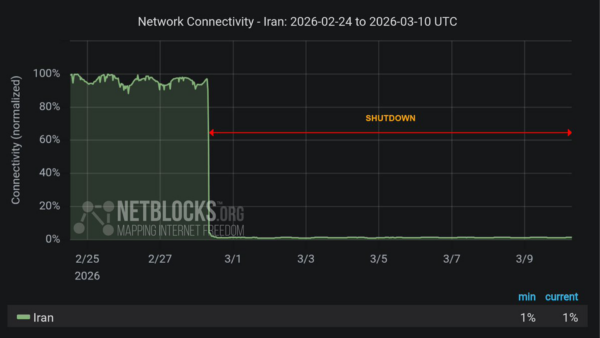
Research on the 2026 shutdown estimated that roughly 96.5%–97.4% of Iranian network prefixes became unreachable from outside access points 2 while internal systems continued operating. War, in this sense, produced not only visibility and invisibility, but multiple, unevenly connected versions of both.
Before the Feed
The idea that communication technologies reshape political power is not new.
Each technological transition has been accompanied by a version of the same narrative: that new media will outpace control. Photocopiers enabled underground publishing. Fax machines were celebrated for their ability to bypass censorship. Satellite television appeared to undermine national information monopolies. Mobile phones were framed as tools of spontaneous democratic coordination. Traces of each of these still remain, as protest movements try to coordinate across them to dodge surveillance, but just as easily as protest movements can mobilise these technologies, so can external interference.
During the January 2026 protests in Iran, for example, protesters reportedly relied on SpaceX’s Starlink satellite internet service to bypass the government’s nationwide internet blackout, while the United States publicly supported efforts to maintain connectivity. Although the extent to which these actions constituted political intervention remains contested, the episode illustrates that digital infrastructures are not politically neutral; rather, they can become instruments through which external actors shape the communicative conditions under which political mobilisation unfolds.3
The Arab Spring became the defining myth of the networked age, reinforcing the belief that connectivity itself produces liberation. But every communication technology eventually becomes integrated into systems of control as well as resistance. Surveillance expands alongside communication. Platforms centralise visibility. States adapt. Movements adapt. The internet did not eliminate power. It redistributed it into infrastructural form.
By the mid-2010s, this redistribution had consolidated around a small number of platform companies whose recommendation systems mediate most global information flows. Unlike earlier decentralised internet models, these platforms operate through centralized ranking algorithms that determine visibility at scale. This shift means that political communication is no longer primarily about publishing content, but about optimizing its legibility within algorithmic systems designed for engagement prediction rather than public deliberation.
Today, the network itself increasingly resembles a contested environment rather than a ‘neutral’ medium. Information warfare, influence operations, bot networks, and algorithmic amplification are not external distortions of the system; they are part of how the system operates and how it thrives.
Kevin Munger’s work 4 on online political communication suggests that influence on digital platforms is produced through network dynamics rather than isolated acts of persuasion. Repeated exposure, coordinated sharing, and platform recommendation systems shape which messages become visible and consequential. The same mechanisms that enable activists to disseminate information rapidly can also be exploited by governments, organised political actors, or coordinated influence operations to suppress, distort, or redirect public attention.
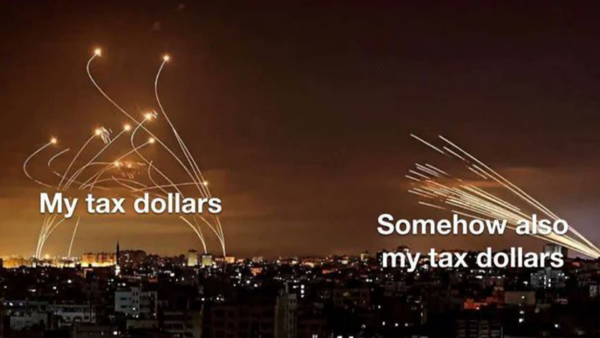
This produces a fundamental imbalance in the circulation of war images.
Not all actors can produce images at the same scale. Not all actors can distribute them equally. Not all images travel with the same speed or persistence. The online representation of conflict depends on access to infrastructure: cameras, internet connectivity, translation networks, media organisations, bot networks, and platform affordances.
Taking the war on Iran as an example, it reached the latest frontier of information warfare through the use of AI-generated Lego videos, and content that matches the zeitgeist, being pushed at full speed across networks.
What happens on the ground and what appears online were related, but not identical. The feed did not attempt to mirror reality, even if reality itself would have tipped the scales in Iran’s favour. Instead, it added another layer of cyber warfare via AI imagery. The feed filtered, amplified, compressed, and rearranged reality. Attention became the currency of geopolitical perception and a weapon in propaganda as well.
Scale, Visibility, and the Problem of Representation
On social media, the war appears only in fragments. The feed is able to circulate incidents but not magnitude. Large-scale violence is broken into isolated, equivalent units of attention, making thousands of deaths visually indistinguishable from hundreds and obscuring the overall shape of the war.
This fragmentation deepens under blackout conditions. During the 2025–26 unrest in Iran, death toll estimates ranged from official counts in the low thousands to independent assessments exceeding 30,000–36,000, with human-rights organisations documenting at least 6,488 confirmed deaths.
Between the rising numbers and the blackout, outrage grew as well, with or without confirmation of precise casualty numbers. Internet restrictions disrupted verification across all sources, turning casualty figures into unstable political claims rather than shared measurements, and also a tool for Western propaganda. Then the blackout happened, and outrage slowly toned down.
Digital platforms compress temporal and spatial scale by rendering events as discrete, equivalent units of media. A single 15-second clip of destruction can represent an entire battlefield moment, regardless of whether it captures the beginning, peak, or aftermath of an event. This creates what media theorists describe as a “flattened temporality,” where duration, sequence, and causality are no longer visually legible. The result is not only fragmentation of context but the erosion of proportional understanding itself.
Casualty figures in contemporary conflicts often emerge from competing epistemic systems: state ministries, hospital records, NGO field reports, satellite inference models, and crowdsourced documentation networks. Each system relies on different evidentiary thresholds, time delays, and access conditions, meaning numerical claims rarely converge quickly, even when describing the same events. In blackout conditions, this divergence intensifies, and numbers begin to function less as measurements than as positions within an ongoing information struggle. Even in the aftermath of restored connectivity, the imprecise figures associated with the war in Iran continue to linger. Their role in hyping up Western intervention is, however, hard to deny. As is the role of deploying a blackout to counter Western propaganda.
The Blackout as an Image
Paradoxically, the blackout itself became an object of circulation. As images from inside Iran became increasingly scarce, screenshots of connectivity graphs, network-monitoring dashboards, and internet traffic visualisations spread across social media. Graphs showing national connectivity collapsing toward zero became a form of evidence.
These images documented not what was visible but what had been made invisible.
In an era where visibility is often equated with existence, the network graph emerged as a strange kind of wartime photograph: an image of disappearance.
The history of communication technologies is often told as a story of increasing visibility: more cameras, more networks, more witnesses. Yet the contemporary experience of war suggests a parallel reality. Visibility remains contingent, uneven, and politically contested, as well as a tactic that can be deployed in warfare, never taking global connectivity for granted.
Living Inside the War Feed, on the Outside.
After a while, I began training my feed to show me the war in Iran. Not intentionally at first. A few videos watched to completion. A few searches. A pause on footage of missile trails cutting across the night sky. The algorithm adjusted.
Soon, the feed became saturated. I realised I wanted to watch to understand.
Explosions. Maps. Debates. Verification threads. Satellite imagery. Reaction videos. Propaganda clips. Memes. AI reconstructions. Commentary arguing over what was real and what was staged.
The experience was not simply informational. It was atmospheric. The feed constructed a parallel reality that existed alongside everyday life. Outside, in my locality, within the Netherlands, few things seemed to change, though those few things were equally as jarring. I’d see Iranian and Israeli flags marching in the city center side by side, as if reality got jumbled. The attacked begging the attacker for liberation. Inside Iran, cities were constantly under attack.
U.S. and Israeli forces conducted strikes across much of Iran, targeting military, governmental, and strategic infrastructure in Tehran, Isfahan, Qom, Kermanshah, Karaj, Bandar Abbas, Minab, Urmia, and Sanandaj. Tehran was the principal target, while southern cities such as Bandar Abbas and Minab experienced some of the war’s most controversial attacks involving civilian casualties.
The difference between the outside and the inside was not just content, but perception.
What does it mean to witness something that is structurally unevenly distributed?
Does increased visibility produce understanding, or does it produce fragmentation?
One clip shows a missile strike. Another shows its aftermath. Another denies it happened. Another turns it into a joke. Another reframes it as propaganda. Another reuses it in an entirely different context.
As the user, I am left to assemble coherence from discontinuity and overlap it with fragments of reality that end up on my physical turf.
Scrolling, be that the digital version of the activity or the real experience of city life, becomes a kind of involuntary forensic practice. Searching for context, for sequence, for stability, often failing. What remains is oscillation: between attention and fatigue, proximity and distance, witnessing and spectacle.
Never before have so many images of war been so accessible to so many people. And never before has the act of seeing been so tightly integrated into systems designed to optimise attention rather than understanding.

A thumb moves upward.
The image disappears.
Another appears.
The 2026 war against Iran effectively came to an end on the 15th of June 2026, when the United States and Iran reached a framework peace agreement aimed at permanently halting hostilities and reopening the Strait of Hormuz after more than three months of conflict. Brokered through international mediation and expected to be formally signed in Switzerland, the agreement established an immediate ceasefire and a 60-day negotiation period to address Iran’s nuclear program, sanctions relief, and broader regional security concerns. The US lost the war on the battlefield. It also managed to lose it in terms of online propaganda. Israel will have a harder time accepting its defeat.
The feed continues.
References
| ↥1 | Chana Joffe-Walt, host. “Blackout” This American Life, episode 886, 1 May 2026, https://www.thisamericanlife.org/886/blackout |
| ↥2 | Ali Sadeghi Jahromi and Jason Jaskolka (2026). A Multi-Perspective Study of the Internet Shutdown in Iran. arXiv.Org. https://arxiv.org/abs/2605.00187 |
| ↥3 | David Rising (2026, January 14). Iranian demonstrators gain boost with SpaceX’s Starlink service. AP News. https://apnews.com/article/iran-protests-starlink-spacex-musk-satellite-9c153cf164959ddd99e4d0f0d4ebd544 |
| ↥4 | Kevin Munger (2019). All the News That’s Fit to Click: The Economics of Clickbait Media. Political Communication, 37(3), 1–22. https://doi.org/10.1080/10584609.2019.1687626 |