Deprecated: Function tribe_get_view( $view = false ) is deprecated since version 6.0.0! Use of this method without a defined $view will be completely removed soon. Please refer to https://evnt.is/v1-removal for template customization instead. in /domains/thehmm.nl/DEFAULT/wp-includes/functions.php on line 6260
“Cloud computing” has become the key component of today’s digital landscape. While the image evoked by the term “the Cloud” conjures an immaterial image of data floating through the air without a root or home, it overshadows the material reality of our digital habits. These habits run on deep-sea internet cables, energy guzzling server farms, precious metals mined for a large variety of chips, and more “stuff” that actually makes up what we now call “the Cloud”. To top it all off, the infrastructure that connects computing to everyday reality is largely owned, governed, and designed by big tech corporations that make all their decisions based on profit maximisation.
How can we bring sustainability, social equity, and democracy to the centre of how these everyday infrastructures are built, developed, and maintained? Can we make self-hosting more accessible? Can we imagine alternative internet structures? Can we bring the Cloud back down to earth? Join us for The Hmm @ H&D Summer Camp, Clouds to Commons, where we’ll take a deep, playful, and experimental look at the Cloud.
This evening is the final public event of the H&D Summer Camp, so we’ve put together a full programme. Starting at 18.00, visitors can already join a printing performance and exhibition where the Summer Campparticipants will be sharing their processes and outcomesof the last two weeks. This sharing moment will continue after the Hmm event. Artist and designer and member of Hackers & Designers Juliette Lizotte, has helped us put together the evening programme, where we willexpore hands-on-hacking, collective learning, speculative fabulation, and big tech resistance with six artists, designers, researchers, and makers.
🗓 Date: Thursday 23 July 2026
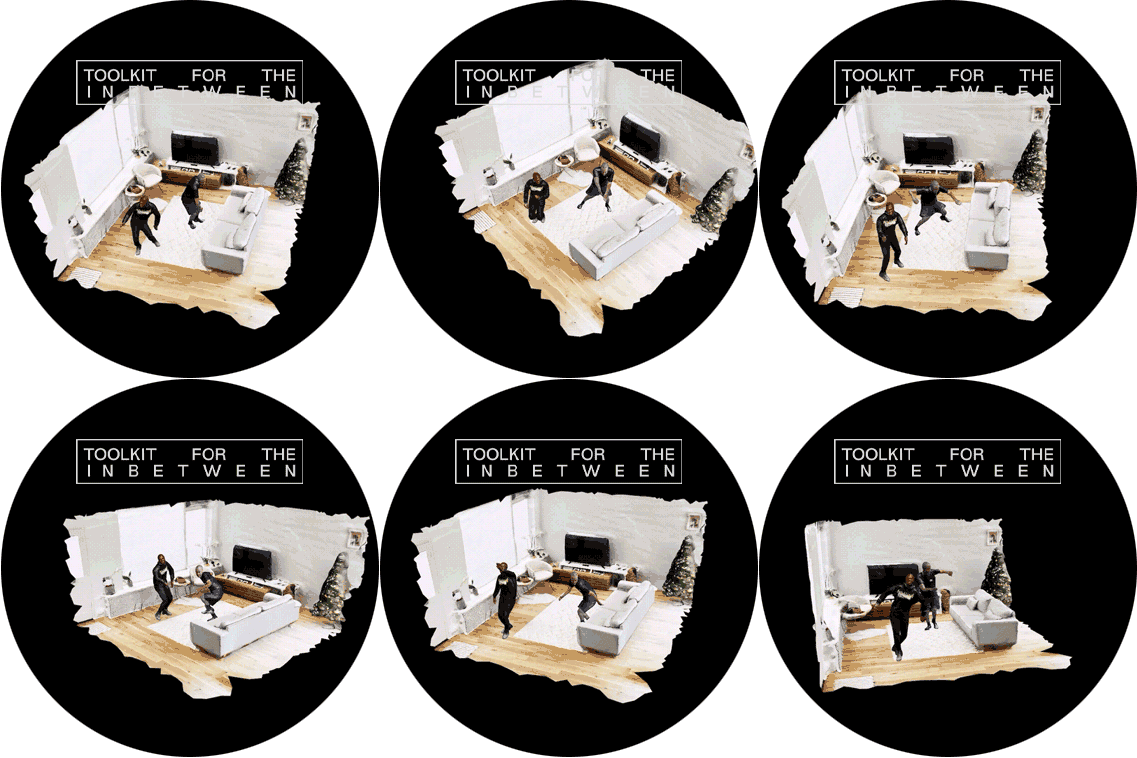
📍 Location: NDSM Theatre, NDSM-Plein 85, Amsterdam, and the Inbetween livestream
⏰ Doors open: 19.45 CEST
🕗 Program starts: 20.00 CEST 🎟 Tickets: on-site €8,- / on-site student discount €5,- / online livestream €5
♿️ Accessibility note The NDSM Theater is located on the ground floor. Unfortunately, there is no wheelchair-accessible toilet and the bar is located on the first floor. During the event we can provide live closed captioning for those with hearing impairments and disabilities. Please reach out to us via info@thehmm.nl, at least 3 days before the event if possible, if you are joining on-site and have this access need, so that we can reserve a seat for you within view of the screen with captions. If you are joining online via our livestream, live captioning will be available as one of the streaming modes.
💙 This event is kindly supported by the Creative Industries Fund NL and the Amsterdam Fund for the Arts
Speakers
1/1
Next speaker
Hicham El Kaddioui
Hicham is a software developer by profession and tinkerer the rest of the time. They’re wary of privacy, online surveillance, and more generally of the power dynamics on the Internet. After being gifted a small mini-PC, Hicham began to explore what could be done with it, spurred on by a deep mistrust of Big Tech. Tonight they’ll be joining us to share some stories about their journey of self-hosting web services from a spare computer in their bedroom, and some insights from the Summer Camp workshops. Link
Amy Gowen
In what ways can we activate the knowledge contained in a publication far before and long after it takes material form? Amy is a writer, editor, and publisher based in Rotterdam, who co-founded and co-runs HumDrumPress, an expanded publishing practice that experiments towards publishing as a commons. She’ll be joining us to talk about HumDrumPress, sharing the specific tried and tested tools and methods for experimenting towards a commons-based publishing models in the permacrisis. In all of their outputs they work with a purpose-built, commons-based publishing model in an attempt to revise each stage of the traditional publishing cycle to make their processes as communal, open-access, and polyvocal as possible. Link
Martyna Pekala
As our world is increasingly plagued by AI misinformation, algorithmic division, and political polarization, how do these changes affect intimate aspects of life, such as self-perception and relationships? Martyna’s practice is characterized by camp and surreal video compositions, digital collages, and hybrid installations. In her research, she fictionalizes and materializes the intricate effects of social media and online presence on an individual’s unique perception of the world—a phenomenon she describes through the term ‘auto-gaze’ which she will be speaking about tonight. Auto-gaze is conditioned by the layer of distortion that personalized algorithms create by dictating the criteria making content visible in the first place and creating a dynamic of mutual surveillance among users—lowering our ability to relate to one another. Link
Martha Dimitratou
In recent months, we have seen the mass removal of Instagram accounts belonging to queer and cultural communities across the Netherlands. Repro Uncensored, Bits of Freedom, and Dutch queer organizations have issued a legal demand against Meta over the removal of these accounts. To date, Repro Uncensored has documented more than 500 cases of online censorship affecting civil society, artists, healthcare providers, and cultural communities worldwide. Martha is the Founder and Executive Director of Repro Uncensored, an organization protecting access to information and defending freedom of expression across reproductive, digital, and cultural spaces worldwide. Her work operates at the intersection of technology, culture, artificial intelligence, and advocacy, bringing together creatives, SRHR organizations, and digital rights defenders to challenge online censorship and expand access to critical reproductive health information, political information, and democracy. Link
Kexin Hong
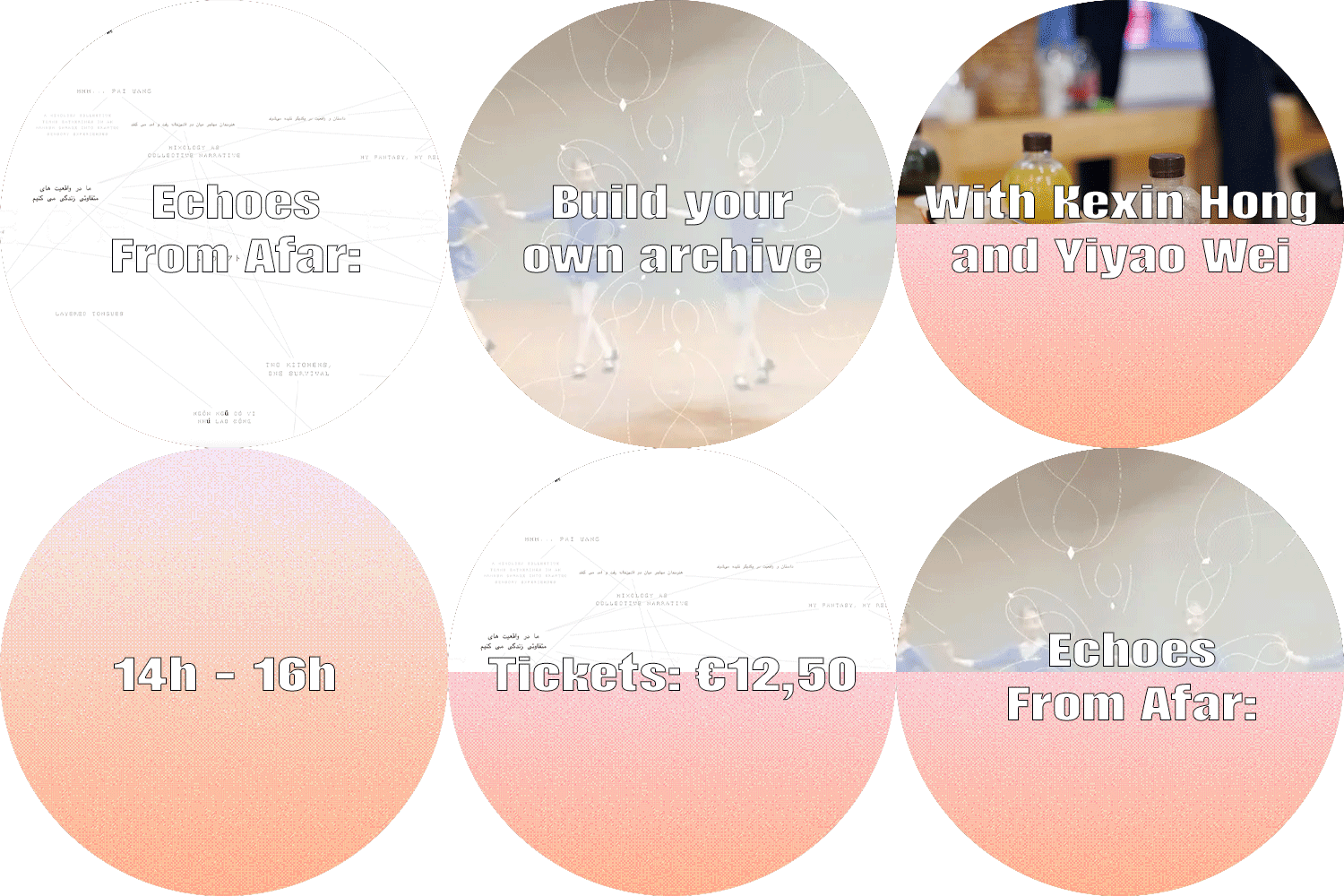
How is Asian diasporic life seen, or not seen, in Dutch society? Kexin is a multidisciplinary artist and filmmaker based in Amsterdam. Working across moving image, installation, and essay film, she delves into the psychosocial and political forces shaping our sense of reality. She’ll be joining us tonight to speak about Echoes from Afar, an open source online archive that rethinks how diasporic stories are told and navigated, with first person narratives and a real time translation system at the core of its design. This helps preserve the first person voice and resist the flattening that Asian communities in the Netherlands often experience in how they’re represented. Echoes from Afar lays the groundwork for forms of visibility that move beyond familiar images. Link
Livio Liechti
Livio is a researcher and writer focused on the materiality of information infrastructures. Together with Apsara Flury, a graphic designer, he runs Papertrail, a publishing collective that investigates how dominant communications infrastructures (re)produce spatial and epistemic power in the public sphere. Papertrail uses walking-based practices, counter-mapping and experimental print production to make infrastructural power and its materiality visible and legible. Livio is also active in the (anti) data centre movement, where he regularly takes people on educational walks to prospective data centre sites and other infrastructural artefacts hidden in plain sight. He’ll be joining us tonight to talk about the GenAI-fueled expansion of hyperscale data centre construction in Europe (Netherlands, Spain, Austria) and how to make the impacts of these megaprojects on peripheral landscapes and more-than-human lives visible and contestable. Link