24 October, 11:00 CEST
Symposihmm 📡 Capture & Control
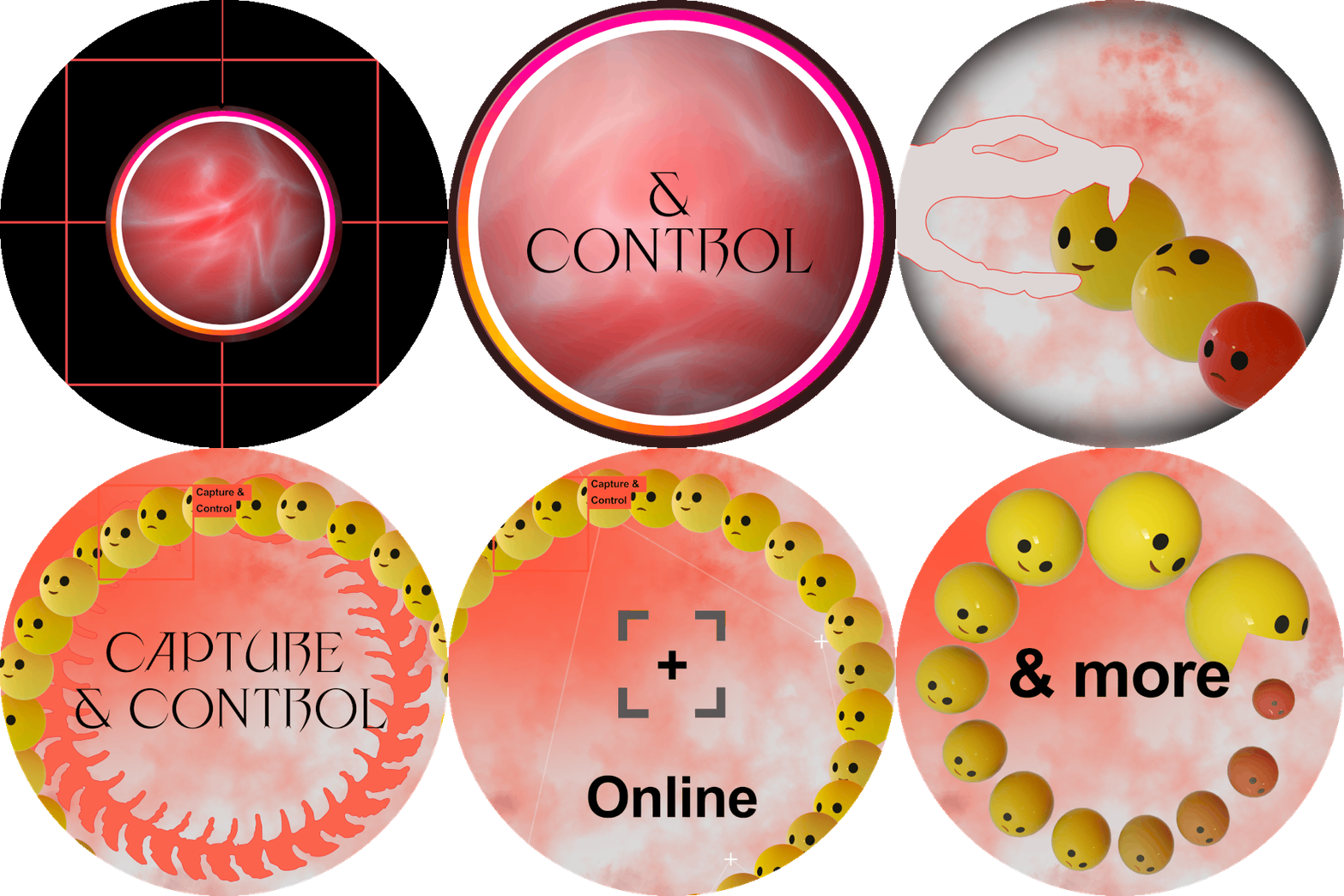
While we comment, post, and scroll our way through social media—externalising our thoughts for data capture—the rampant digitisation and replication of the earth and biological life is quietly taking place. Companies like Quixel, with over 18,000 3D assets that they’ve captured—plants, rocks, logs, coral reefs, forest floors—sell our earth back to us to be used in gaming and other industries. Google Maps has led to Google Earth has led to the end-goal of digitally capturing the entire planet in order to create digital twins, train AI world models, ‘preserve’ habitats and monuments on the brink of collapse, and build predictive systems. Palantir thrives on this data hoarding, using it to analyse and create connections within disconnected data sets for militarisation and surveillance purposes. In the US, Flock cameras scan around 20 billion license plates every month, tracking the movement of people within cities and between states. And surveillance is expanding even further, onto our own bodies, with Meta selling over 7 million pairs of their Ray-Ban smart glasses in 2025, a huge jump from previous years. The processes of capturing, connecting, and analysing every element on earth is no longer a paranoid delusion, it’s unfolding in front of our eyes.
📋 Program
11.00 – 12.30
- Welcome and introduction
- Talk by Daniël de Zeeuw
- Talk by Sophie Publig & Mikkel Rørbo
12.30 – 13.15
- Lunch break
13.15 – 15.00
- Half-Earth Socialism: A Planetary Crisis Game with Francis Tseng
- The Internet is a Horrible Place and I’m Here to Make it Worse: A workshop with Noura Tafeche (online host)
- Ambitopian Sonic Un-Realism: A workshop with Søren Siebel
15.15 – 17.00
- Conversation with Marina Otero Verzier (online speaker)
- One pixel, many worlds, lecture-performance by Emilia Tapprest & Søren Siebel
Throughout the day there will be an exhibition with works by Nick Vyssotsky, Constant Dullaart, and Tewa Barnosa.
During the lunch break San Serriffe will have a pop-up bookshop selling publications from the speakers and artists and other books connected to the symposium’s themes.
Please note that the activities between 13.15 and 15.00 won’t be broadcast on our livestream. Upon arrival at A Lab you can sign up for one of the activities on a first-come-first-served basis.
For Noura Tafeche’s and Søren Siebel’s workshops, you will need to bring a laptop with you.
Please note that Noura Tafeche’s workshop includes discussion and analysis of implicit violent imagery and representations of rape culture, child abuse, and self-harm.
📅 Date: Saturday 24 October
🕗 Time: 11.00 – 17.00 CEST
📍 Location: A Lab and livestream on The Inbetween
🎟️ Tickets: Onsite €27,50/Student €20/Livestream 7,50
♿ Accessibility
- At the venue, a wheelchair-accessible ramp is available, as well as a wheelchair lift. The lift needs to be arranged in advance, so please email us at info@thehmm.nl, at least 3 days before the event, to let us know if you will need it. This allows us to make sure everything is ready and accessible upon arrival.
- A Lab has an accessible MIVA (wheelchair-accessible) toilet that meets the applicable accessibility requirements.
- During the event we can provide live closed captioning for those with hearing impairments and disabilities. Please reach out to us via info@thehmm.nl—at least 3 days before the event if possible—if you are joining on-site and have this access need, so that we can reserve a seat for you within view of the screen with captions. If you are joining online via our livestream, live captioning will be available as one of the streaming modes.
🩵 This programme is kindly supported by the Creative Industries Fund NL, AFK and hosted by A Lab.